
How to leverage opportunities?
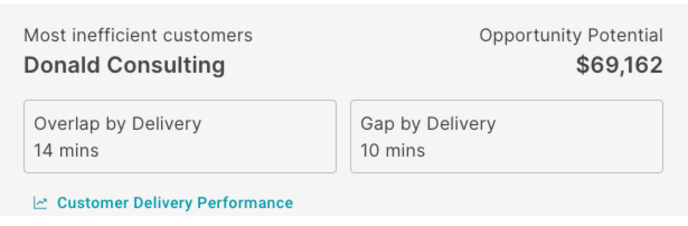
We look at your data every day to find the highest opportunity values and provide some context around it. Use the dashboards to figure out the best action in order to capture the opportunity value.
If you find an opportunity that you want to action, you can click on add action in order to track an action against it.
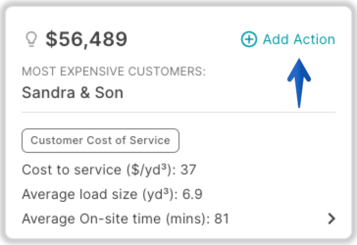
Learn more about or actions here.
What timeframe of the data is the opportunity looking at?
Opportunities need to be actionable now and reflect the most up to date date from your business, that is why C60 looks at different timeframe of your data to calculate the opportunities, based on each dashboard.
To find more about each timeframe a dashboard is looking at, visit our dashboard section.
What does annualization mean?
We look at opportunity like the cost of the status quo. If the behaviours were to continue for a whole year, this is the opportunity cost it would represent for your business. For example, if over the last 3 months, a customer cost you 10 000$ because of a high on site time, if they were to continue this behaviour for a whole year, this would represent 40 000$ (10 000$ x 4).
🔍 Going in the details
The previous example is a simplified version of our annualization. In reality, the formula we use is the following: Opportunity Value x 365 / Number of days in the period
This means that if you are looking at the last 90 days and we calculate an opportunity value of 10 000$, the annualized opportunity is:
10 000 x 365 / 90 = 40 555$
How are opportunities on the home page calculated?
We take the top 5 opportunities in each dashboard and show them on the home page.
What timeframe are opportunities looking at?
It varies per dashboard. Sometimes it makes more sense to look at recent data and ignore older data (e.g Batching Accuracy) but some other times we need a longer timeframe to better identify trends (e.g Margin by Customer).